
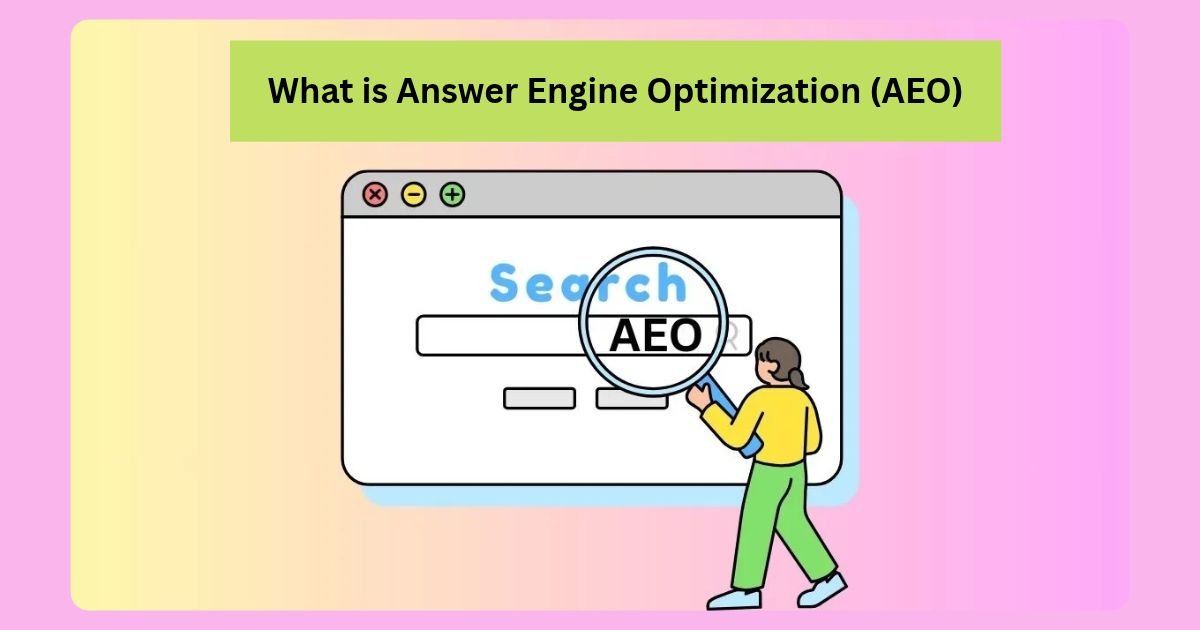
What Is an Answer Engine?
An answer engine is a platform or technology that provides direct answers to users’ questions instead of simply displaying a list of websites.
Traditional search engines generally show links to relevant webpages. Answer engines can process a question, identify relevant information, and present a summarized response.
Examples include:
- Google AI Overviews.
- ChatGPT.
- Microsoft Copilot.
- Perplexity AI.
- Google Gemini.
- Voice assistants such as Siri and Alexa.
These platforms use different technologies and sources to provide answers.
For website owners, this creates an opportunity to make their content more useful, accessible, and discoverable across different search experiences.
How Does Answer Engine Optimization Work?
AEO focuses on creating content that clearly answers questions people are asking.
For example, imagine someone searches:
“What is the best way to improve website speed?”
A well-structured article might include:
What is website speed optimization?
Website speed optimization is the process of improving how quickly a website loads and responds to user interactions. It includes image compression, caching, code optimization, and server performance improvements.
This direct explanation makes the information easy for readers to understand and potentially useful for answer systems.
Answer engines may retrieve information from indexed websites, databases, and other sources. Depending on the platform, they can use that information to generate answers and provide source links.
There is no guaranteed method to make an answer engine select a particular webpage.
AEO vs SEO vs GEO: What Is the Difference?
These three terms are related but have different areas of focus.
| Optimization type | Main purpose |
|---|---|
| SEO | Improve visibility in traditional search results |
| AEO | Make content suitable for direct answers |
| GEO | Improve visibility in generative AI responses |
Search Engine Optimization (SEO)
SEO focuses on improving your website’s visibility in organic search results.
Common SEO activities include:
- Keyword research.
- Technical SEO.
- On-page optimization.
- Link building.
- Content development.
- Website performance improvements.
Answer Engine Optimization (AEO)
AEO focuses on making your content clear, informative, and structured around users’ questions.
Its common activities include:
- Answer-focused content writing.
- Question-based headings.
- Concise explanations.
- FAQ content.
- Clear information structure.
- Accurate and useful answers.
Generative Engine Optimization (GEO)
GEO focuses on improving the visibility of your brand and content across generative AI search experiences.
It can involve:
- Building brand authority.
- Publishing original research.
- Creating expert-led content.
- Earning credible brand mentions.
- Improving website information.
- Developing a consistent online presence.
Although these strategies overlap, they are not exactly interchangeable.
Why Is Answer Engine Optimization Important in 2026?
The way people search for information is changing. Instead of typing short keywords, users increasingly ask complete questions and expect helpful explanations.
This creates several opportunities for businesses.
1. Improve Visibility in AI-Powered Search
AI-powered platforms can provide direct responses to user questions and sometimes reference supporting websites.
By publishing useful, well-organized information, you can improve your website’s suitability for these search experiences.
2. Reach Customers Who Ask Questions
People frequently ask questions before purchasing products or hiring services.
For example:
- Which digital marketing agency is best for small businesses?
- How much does website development cost?
- What is the best SEO strategy for a new website?
- How can I fix a slow Windows 11 computer?
Creating helpful content around these questions can attract people researching your industry.
3. Build Brand Awareness
When your business is mentioned or referenced by relevant answer platforms, it may increase brand awareness.
Even when users do not immediately click your website, discovering your brand can influence their future purchasing decisions.
4. Establish Industry Expertise
Publishing detailed tutorials, original research, practical guides, and expert explanations helps demonstrate your knowledge.
This can strengthen your website’s credibility with both readers and search systems.
5. Support Your Overall SEO Strategy
AEO does not replace traditional SEO.
Instead, it encourages you to make your existing content more useful, organized, and accessible.
A strong SEO foundation remains important for visibility across many search experiences.
How to Optimize Your Website for Answer Engines
Now let’s explore practical AEO techniques you can implement on your website.
1. Understand Your Audience’s Questions
Start by identifying the questions your potential customers ask.
You can find useful questions through:
- Google autocomplete.
- People Also Ask.
- Google Search Console.
- Customer support conversations.
- Online forums.
- Industry discussions.
- Keyword research tools.
For example, if you run a computer troubleshooting website, your audience may search for:
- Why is my laptop running slowly?
- How do I fix a printer offline problem?
- Why is Windows 11 showing a black screen?
- How can I reduce computer overheating?
- How do I update a printer driver?
Create useful articles that address these questions.
2. Provide Direct Answers at the Beginning
One important AEO content practice is answering the main question clearly.
For example:
Question: What is website hosting?
Website hosting is a service that stores your website’s files and makes them accessible to visitors through the internet.
After providing the direct answer, expand with additional explanations, examples, and practical information.
Avoid making readers go through several paragraphs before finding the answer.
3. Use Question-Based Headings
Organize your content around the questions your audience wants answered.
Examples:
- What Is Answer Engine Optimization?
- How Does AEO Work?
- Why Is AEO Important?
- How Can I Improve AEO?
- What Is the Difference Between AEO and SEO?
Question-based headings make your articles easier to navigate and help readers quickly locate relevant information.
4. Write Clear and Concise Content
Answer engines need understandable information to provide useful responses.
Follow these writing practices:
- Use simple language.
- Keep paragraphs focused.
- Explain technical terms.
- Include practical examples.
- Avoid unnecessary repetition.
- Use bullet points where appropriate.
- Support important claims with reliable sources.
Your primary goal should be to help readers understand the topic.
5. Create Detailed FAQ Sections
Frequently Asked Questions are useful for addressing specific customer concerns.
For example, a website development company could include:
How much does it cost to build a website?
Website development costs depend on the platform, design complexity, required features, hosting, and customization. A basic website generally costs less than a custom business platform or ecommerce website.
Can I create a website without coding?
Yes. Website builders such as WordPress, Wix, and Shopify allow users to create websites without advanced programming knowledge.
Make sure every FAQ answer is accurate and relevant.
FAQ content does not automatically qualify a page for special Google search features or guarantee AI citations.
6. Use Structured Data and Schema Markup
Structured data helps search engines understand specific information on your webpages.
Depending on your content, relevant schema types may include:
- Article.
- Organization.
- LocalBusiness.
- Product.
- BreadcrumbList.
- Person.
For example, Article schema can help describe an article’s headline, author, and publication information.
Use structured data that accurately represents the visible content on your webpage.
Remember that schema markup does not guarantee inclusion in AI-generated answers.
7. Demonstrate Experience and Expertise
Publishing original and trustworthy information can help your website stand out.
Consider including:
- Author biographies.
- Professional experience.
- Original research.
- Real case studies.
- Screenshots and demonstrations.
- Expert opinions.
- References to reliable sources.
- Updated information.
For technical tutorials, explain the actual steps and include relevant screenshots where possible.
Avoid publishing generic articles that simply repeat information already available on hundreds of websites.
8. Improve Website Technical SEO
Answer-focused content still needs a technically accessible website.
Check the following:
- Important pages are crawlable.
- Search engines can index your content.
- Your robots.txt file does not block important pages.
- Your website uses HTTPS.
- Internal links connect related articles.
- Your sitemap is available.
- Your website works on mobile devices.
- Important information is available as readable text.
- Pages load reliably.
Google’s guidance confirms that its AI search features continue to rely on foundational SEO practices. <Cite refs={[“turn560954search0″,”turn560954search4”]}/>
9. Build Your Brand’s Online Presence
AEO is not only about publishing articles on your website.
Your business should maintain consistent and accurate information across relevant online platforms.
Consider:
- Updating your official website.
- Maintaining your Google Business Profile.
- Publishing useful industry content.
- Participating in relevant industry communities.
- Earning genuine editorial mentions.
- Maintaining professional social media profiles.
- Collecting authentic customer reviews.
Focus on building a real reputation instead of manufacturing artificial brand mentions.
10. Keep Your Content Updated
Outdated information can reduce the usefulness of your website.
Review important articles periodically and update:
- Software instructions.
- Product information.
- Industry statistics.
- Pricing information.
- Technical recommendations.
- Broken links.
- Outdated screenshots.
Include publication and modification dates when appropriate.
Only change the published date when a meaningful update has actually been made.
Best Content Types for Answer Engine Optimization
Some content formats are particularly useful for answering specific questions.
| Content type | Example |
|---|---|
| How-to guides | How to fix a printer offline problem |
| Definition articles | What is website hosting? |
| Comparison articles | WordPress vs Wix |
| Troubleshooting guides | How to fix Windows 11 black screen |
| FAQ pages | Frequently asked SEO questions |
| Step-by-step tutorials | How to create a website |
| Expert guides | Complete local SEO guide |
| Case studies | How a business improved website traffic |
Choose formats based on what your audience needs rather than trying to use every format on every page.
How to Measure AEO Performance
AEO requires more than checking your traditional Google keyword rankings.
You should also monitor how your brand and content appear across different answer platforms.
Important measurements include:
AI citations: Check whether AI platforms reference your website as a source.
Brand mentions: Monitor whether your company is mentioned in relevant AI-generated responses.
Referral traffic: Use Google Analytics 4 to identify traffic arriving from AI platforms where referral information is available.
Organic search performance: Monitor impressions, clicks, and search queries in Google Search Console.
Conversions: Measure leads, contact form submissions, purchases, and other meaningful business actions.
Answer visibility: Test relevant customer questions across different answer engines and record whether your business or content appears.
Remember that AI responses can change based on the platform, question, location, and user context. Manual checks are useful, but they are not a complete measurement system.
Best Tools for Answer Engine Optimization in 2026
You can use different tools to research questions, improve content, and monitor website performance.
Google Search Console
Helps monitor search impressions, clicks, indexing, and website search performance.
Website: https://search.google.com/search-console/
Google Analytics 4
Helps measure website traffic, user engagement, referral sources, and conversions.
Website: https://analytics.google.com/
ChatGPT
Can help brainstorm customer questions, organize content, explain complex topics, and improve article readability.
Website: https://chatgpt.com/
Semrush
Provides keyword research, competitive analysis, and SEO reporting features.
Website: https://www.semrush.com/
Ahrefs
Useful for keyword research, backlink analysis, competitor research, and content planning.
Website: https://ahrefs.com/
AlsoAsked
Helps discover related questions and understand how search questions connect.
Website: https://alsoasked.com/
Tool features and pricing can change, so check the official websites before subscribing.
Common AEO Mistakes to Avoid
Businesses often make mistakes when implementing answer engine optimization.
Avoid the following:
- Writing content only for AI systems instead of readers.
- Publishing inaccurate or unverified information.
- Repeating keywords unnaturally.
- Copying competitor articles.
- Creating unnecessary FAQ sections.
- Using irrelevant schema markup.
- Publishing large amounts of low-quality AI-generated content.
- Ignoring traditional SEO.
- Making unsupported claims.
- Expecting guaranteed citations in AI answers.
Google recommends focusing on helpful, reliable, people-first content instead of search-engine manipulation techniques. <Cite refs={[“turn560954search8″,”turn560954search0”]}/>
Frequently Asked Questions (FAQs)
1. What does AEO stand for in digital marketing?
AEO stands for Answer Engine Optimization. It is the practice of improving website content so that search engines and AI-powered answer platforms can understand and potentially use it when responding to user questions.
2. Is AEO different from SEO?
Yes. SEO broadly focuses on improving organic search visibility, while AEO focuses more specifically on making content suitable for direct answers. Both strategies overlap and can work together.
3. Does AEO help websites appear in ChatGPT?
AEO practices can improve the clarity, usefulness, and discoverability of website content. However, there is no guaranteed technique that ensures ChatGPT will reference a particular website.
4. Is AEO important for small businesses?
Yes. Small businesses can use AEO to answer customer questions, demonstrate expertise, improve brand visibility, and reach people researching relevant products and services.
5. How long does AEO take to show results?
There is no fixed timeline. Results depend on content quality, website authority, indexing, competition, and how individual answer platforms retrieve information.
6. Does FAQ schema improve AEO?
Structured data can help search engines understand webpage information, but FAQ schema does not guarantee AI citations or enhanced search appearances. Use schema only when it accurately represents your page.
7. Can AI-generated content be used for AEO?
Yes, AI tools can assist with research, outlining, and writing. However, the final content should be fact-checked, edited, original, and genuinely helpful to readers.
8. What is the difference between AEO and GEO?
AEO focuses on optimizing content for direct answers, while GEO focuses more broadly on visibility in generative AI responses. The two strategies overlap considerably.
9. Which platforms should I optimize for?
Consider Google AI Overviews, ChatGPT, Perplexity, Microsoft Copilot, and Gemini, depending on your audience and business goals.
Final Thoughts
Answer Engine Optimization is becoming an important consideration for businesses that want to remain visible as online search evolves.
People increasingly expect direct, relevant, and useful answers instead of spending time browsing multiple webpages.
To prepare your website, focus on answering real customer questions, creating informative content, using clear headings, maintaining accurate information, and improving your technical SEO.
Most importantly, don’t abandon traditional SEO. AEO works best as part of a broader digital marketing strategy that prioritizes helpful content, website quality, and customer experience.
The goal is simple: create content that people trust, understand, and find genuinely useful.




Add comment